
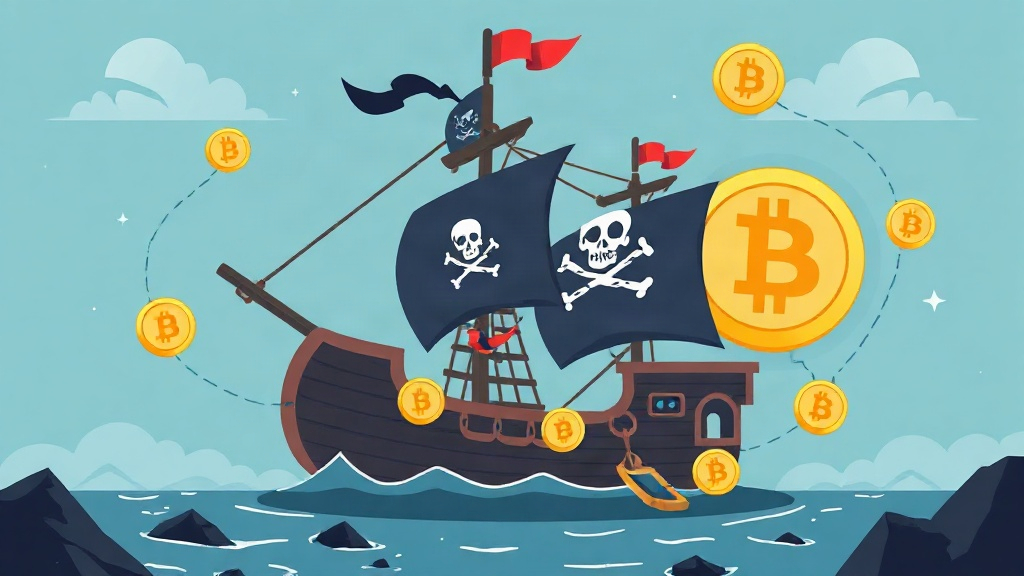
In the rapidly evolving landscape of privacy‑focused cryptocurrencies, Pirate Chain has carved out a distinctive niche by combining robust anonymity guarantees with a forward‑thinking approach to cross‑chain interoperability. While many projects concentrate solely on shielding transaction details, Pirate Chain goes a step further by enabling seamless atomic swaps between its native token, ARRR, and assets on other blockchains. This capability not only boosts liquidity for ARRR holders but also allows users to trade without trusting centralized intermediaries, all while keeping every on‑chain interaction invisible to prying eyes. In the sections that follow we will demystify atomic swaps, explore how Pirate Chain implements them, provide a step‑by‑step guide for executing a swap, and examine the broader implications for privacy‑centric finance.
What is Pirate Chain and the ARRR Token?
Pirate Chain is a proof‑of‑work blockchain that enforces end‑to‑end confidentiality through a suite of advanced cryptographic primitives, including Ring Confidential Transactions (RingCT), stealth addresses, and a decentralized governance model. Every transaction on the network hides the sender, receiver, and amount, making it impossible to link funds to a specific user without additional information. The native cryptocurrency, ARRR, serves as the lifeblood of the ecosystem, incentivizing miners, securing the network, and acting as a bridge asset for cross‑chain exchanges. Unlike many privacy coins that offer optional privacy modes, Pirate Chain makes confidentiality mandatory, ensuring that all transfers are indistinguishable from one another. This design philosophy extends to its support for atomic swaps, where ARRR can be exchanged directly with assets on other chains without ever exposing sensitive data.
Understanding Atomic Swaps
Atomic swaps are cryptographic agreements that enable two parties to exchange different cryptocurrencies instantly, with the guarantee that either both parties receive their funds or neither does. The protocol relies on hash‑time‑locked contracts (HTLCs) and cryptographic proofs, eliminating the need for custodial services or trusted third parties. When executed correctly, atomic swaps provide a trustless, decentralized method of trading, preserving user privacy and reducing counterparty risk. For privacy‑focused ecosystems like Pirate Chain, atomic swaps are a natural fit because they keep transaction details hidden while still enabling interoperability across disparate blockchains. The underlying mechanics involve locking funds on both sides, exchanging secret preimages, and releasing the funds only when both parties have verified the necessary cryptographic conditions.
How Pirate Chain Implements Atomic Swaps
Pirate Chain’s implementation of atomic swaps builds on the standard HTLC model but adds layers of privacy‑enhancing features that are baked into the protocol. When a user initiates a swap, the transaction is wrapped in a stealth address, ensuring that the recipient’s identity remains hidden. Additionally, RingCT obscures the exact amount being swapped, so observers cannot determine the value transferred. Pirate Chain’s official wallet includes a built‑in swap module that guides users through the process, from generating a secret to broadcasting the final release transaction. Because the entire workflow is open‑source, the community can audit the code, suggest improvements, and even develop alternative implementations that maintain the same privacy guarantees. By embedding atomic swap logic directly into its core, Pirate Chain positions ARRR as a versatile liquidity provider that can move fluidly across the broader crypto ecosystem.
Practical Tips for Performing an Atomic Swap with ARRR
- Select a compatible counterparty chain: Verify that the asset you wish to trade (e.g., Bitcoin, Litecoin, or Ethereum) supports HTLC‑based swaps and that a compatible wallet exists for that chain.
- Use a trusted wallet: Pirate Chain’s official desktop or mobile wallet, as well as reputable third‑party wallets that support ARRR and HTLCs, provide a secure environment for initiating swaps.
- Create a unique secret: The swap protocol requires a random secret that only you know; keep this secret confidential until the swap is completed.
- Set appropriate lock‑times: HTLCs include a timeout parameter; choose a duration that gives you enough time to complete the exchange without risking loss of funds.
- Double‑check addresses and amounts: Before confirming the swap, verify the destination address, the amount of ARRR you are sending, and the expected receipt amount on the counterparty chain.
- Maintain offline backups: Store your seed phrase and any generated secrets in a secure, offline location to protect against device compromise or data loss.
Following these precautions dramatically reduces the chance of a failed swap and ensures that your privacy remains intact throughout the entire process.
Benefits and Future Outlook
The integration of atomic swaps into Pirate Chain brings several strategic advantages. First, it dramatically improves liquidity for ARRR, allowing holders to diversify into other assets without exposing their transaction history. Second, it encourages other privacy‑centric projects to adopt similar swap mechanisms, fostering a more interconnected yet confidential financial ecosystem. Third, as regulatory pressures increase, the ability to trade assets privately and without intermediaries becomes a compelling value proposition for users seeking censorship‑resistant finance. Looking ahead, Pirate Chain’s development roadmap includes further optimizations to swap speed, expanded cross‑chain compatibility, and user‑friendly interfaces that will lower the barrier to entry for newcomers. These enhancements promise to make atomic swapping not only a technical achievement but also a practical, everyday tool for privacy‑focused investors.