
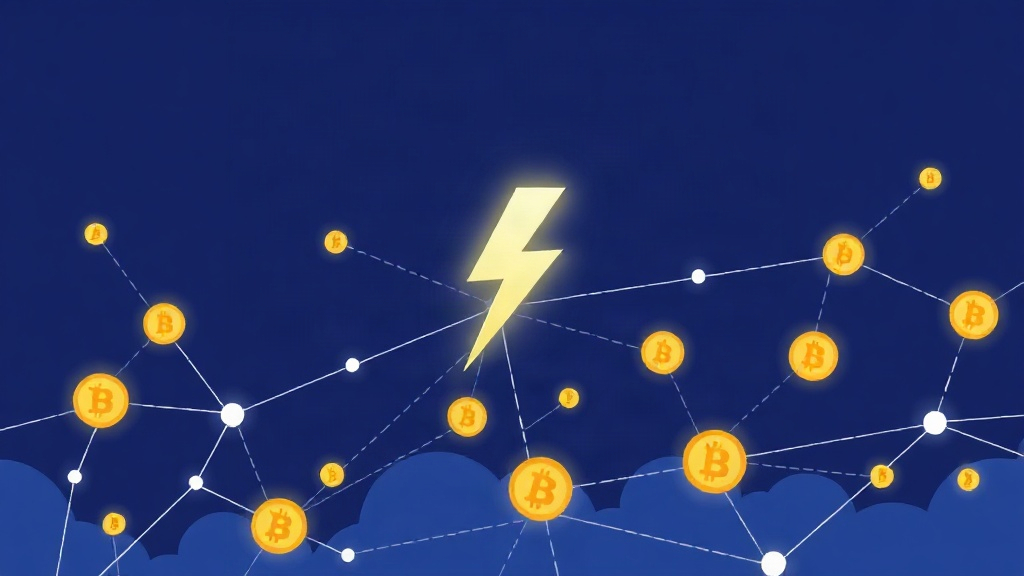
The rise of creator economies, membership platforms, and digital services has put pressure on payment systems to be both seamless and secure. Traditional credit card networks charge high fees, suffer from chargebacks, and often require personal data exposure. Enter the Lightning Network—a second-layer scaling solution for Bitcoin that enables instant, low-cost transactions. For subscription-based businesses, Lightning isn't just a technical upgrade; it's a strategic shift toward privacy, efficiency, and user empowerment.
Why Subscriptions Need a Better Payment Layer
Monthly recurring payments have become the backbone of SaaS, media, and online communities. However, the underlying infrastructure often introduces friction. High transaction fees eat into thin margins, especially for low-cost tiers. Cross-border payments face delays and conversion costs. Moreover, merchants are required to store sensitive customer data, creating compliance burdens under regulations like GDPR. The Lightning Network addresses these pain points by operating off-chain, settling only the net balance on the Bitcoin mainnet when channels close. This means subscriptions can be billed instantly, with minimal fees, and without exposing every user's financial history to the public.
How Lightning Network Works for Recurring Payments
Lightning creates payment channels between two parties. Once a channel is open, an unlimited number of payments can be sent back and forth instantly, with only the final balance recorded on-chain. For subscriptions, this means a user opens a channel with a service provider, and each monthly payment is a simple update to the channel state. The user retains control of their funds, and the provider receives payment without needing to initiate a new on-chain transaction each time. Key technical points include:
- Hash Time-Locked Contracts (HTLCs) ensure atomic swaps and payment reliability.
- Routing nodes enable payments across channels without direct connections.
- Settlement finality occurs when the channel is closed, reducing on-chain load.
This architecture is particularly suited for subscriptions because it transforms a series of individual transactions into a single, ongoing payment relationship.
Privacy Benefits of Lightning for Subscriptions
For crypto enthusiasts who value financial privacy, Lightning offers significant advantages. Unlike on-chain Bitcoin transactions, which are permanently public and traceable, Lightning payments are off-chain and only visible to the channel participants. Even then, routing information is obfuscated through onion routing, making it extremely difficult to link a payment to a specific user or service. Additionally, users can employ new channel rebalancing techniques or use privacy-focused wallets that rotate addresses and channels regularly. The result is a subscription model where recurring payments don't continuously broadcast the user's spending habits to the entire network.
Practical Implementation Tips
- Choose a Lightning-compatible billing platform – Services like BTCPay Server, Strike, or Alby provide out-of-the-box integration for recurring invoices.
- Set appropriate channel reserve fees – Ensure your node has enough liquidity to send and receive payments without getting stuck.
- Use invoice expiration and auto-renewal – Lightning invoices can be set to expire, so automated renewal scripts are essential for seamless subscriptions.
- Educate your users – Many potential subscribers are unfamiliar with Lightning wallets. Provide clear onboarding guides and wallet recommendations.
- Monitor channel health – Use tools like RTL or ThunderHub to track inbound/outbound liquidity and avoid payment failures.
Integrating Lightning Network into a subscription model requires a shift in mindset from traditional payment processing to a more dynamic, user-centric approach. The benefits—lower fees, instant settlement, and enhanced privacy—make it a compelling choice for any creator or business looking to modernize their revenue streams. As the ecosystem matures, tools and wallets will only become more intuitive, further lowering the barrier to entry for both providers and consumers.
By embracing Lightning, subscription operators not only future-proof their payment infrastructure but also align with the core ethos of decentralization and user sovereignty that drives the cryptocurrency movement forward.