
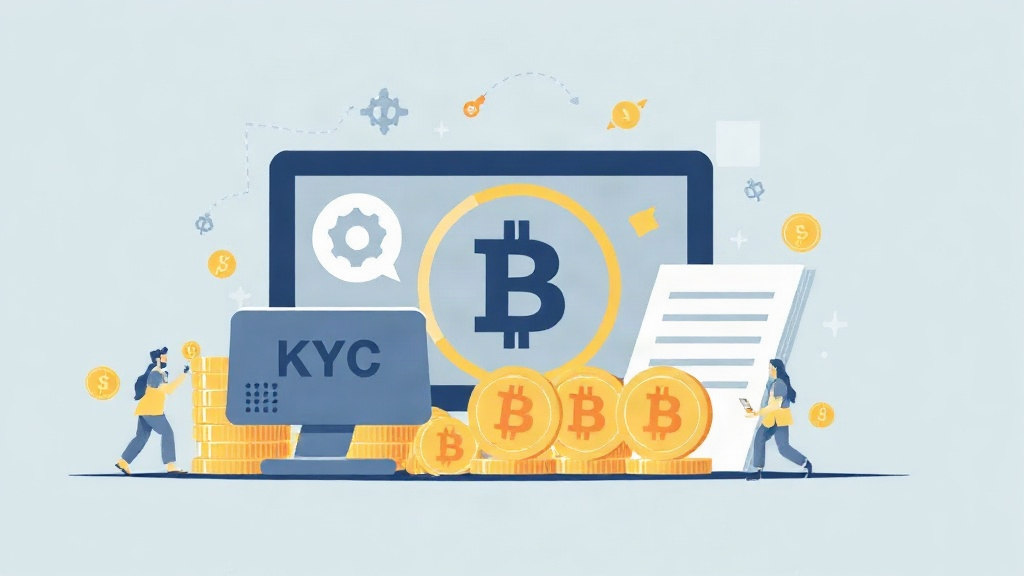
The rise of instant cryptocurrency exchangers has transformed how traders swap assets, offering speed and convenience without the friction of traditional order books. However, this efficiency often comes with a trade-off: Know Your Customer (KYC) mandates that can erode the privacy ethos many crypto users cherish. Understanding how these requirements function—and how to navigate them without compromising security—is essential for anyone valuing financial discretion in the digital age.
The Mechanics of KYC in Instant Exchanging
Instant exchangers act as intermediaries that facilitate rapid token swaps, often aggregating liquidity from multiple sources such as decentralized pools, centralized market makers, and over-the-counter desks. To comply with anti-money laundering (AML) directives and regional financial regulations, many platforms integrate automated KYC workflows. These checks can range from a simple email confirmation link to rigorous identity verification involving government-issued documents, facial biometrics, and proof of residential address. The depth of verification typically dictates transaction ceilings, fiat gateway access, and the platform's licensing status in specific jurisdictions. While KYC enhances legitimacy, deters illicit flow, and enables fiat on-ramps, it also introduces a transparent ledger linking real-world identities to pseudonymous wallet addresses—a tension that privacy-conscious users must navigate carefully.
Privacy Implications of Mandatory KYC
When personal data is surrendered to a centralized exchanger, users place trust in the platform's data stewardship practices. History has shown that even well-intentioned services can suffer breaches, exposing sensitive documents such as passports, selfies, and utility bills. Beyond cybersecurity risks, legal mechanisms like court subpoenas or regulatory audits can compel data disclosure, potentially revealing a user's entire trading history. Furthermore, the aggregation of KYC records across multiple services creates a composite profile of financial behavior, undermining the pseudonymous nature of blockchain. For those who view financial privacy as a fundamental right, this data linkage represents a significant erosion of self-sovereignty, regardless of whether the platform claims to encrypt or delete records after verification.
Practical Strategies to Protect Your Privacy
- Prioritize platforms with optional or minimal KYC – Many instant exchangers permit low-volume swaps without identity verification, though daily or monthly limits apply. Researching these thresholds beforehand helps avoid unexpected compliance requests.
- Utilize decentralized exchanges (DEXs) – DEXs operate without central intermediaries, meaning KYC is generally not required. Users retain full control of private keys, though they must bear responsibility for gas fees and smart contract risks.
- Implement wallet segregation – Maintain separate wallets for KYC-verified accounts and privacy-focused transactions. This compartmentalization minimizes data overlap and reduces the risk of cross-platform profiling.
- Leverage mixing services or privacy coins – Where legal and technically permissible, tools such as CoinJoin or privacy-oriented assets like Monero can help obfuscate transaction trails following an exchange, adding a layer of anonymity to on-chain activity.
- Stay informed about regional regulations – KYC obligations vary significantly by country. Understanding local laws enables smarter platform selection and helps you anticipate when verification may become mandatory.
Choosing the Right Platform for Your Needs
Selecting an instant exchanger requires balancing three core factors: speed, cost, and privacy. Begin by examining the platform's transparency report or privacy policy; reputable services clearly articulate data retention periods, verification thresholds, and whether user information is shared with third parties. Compare user feedback regarding verification turnaround times and the process for limit increases. For individuals operating in jurisdictions with strict regulatory scrutiny, peer-to-peer (P2P) networks or non-custodial swapping tools may offer a more aligned alternative. Ultimately, the optimal choice reflects your risk tolerance, typical transaction volume, and comfort level with data sharing, allowing you to trade with confidence while preserving the degree of privacy you deem essential.
As the cryptocurrency ecosystem matures, the interplay between regulatory compliance and user privacy will only grow more complex. By internalizing the mechanics of KYC, recognizing its privacy implications, and applying targeted strategies, you can engage with instant exchanges on your own terms. Empower yourself with knowledge, select platforms that respect your boundaries, and always prioritize the security and discretion of your digital assets.