
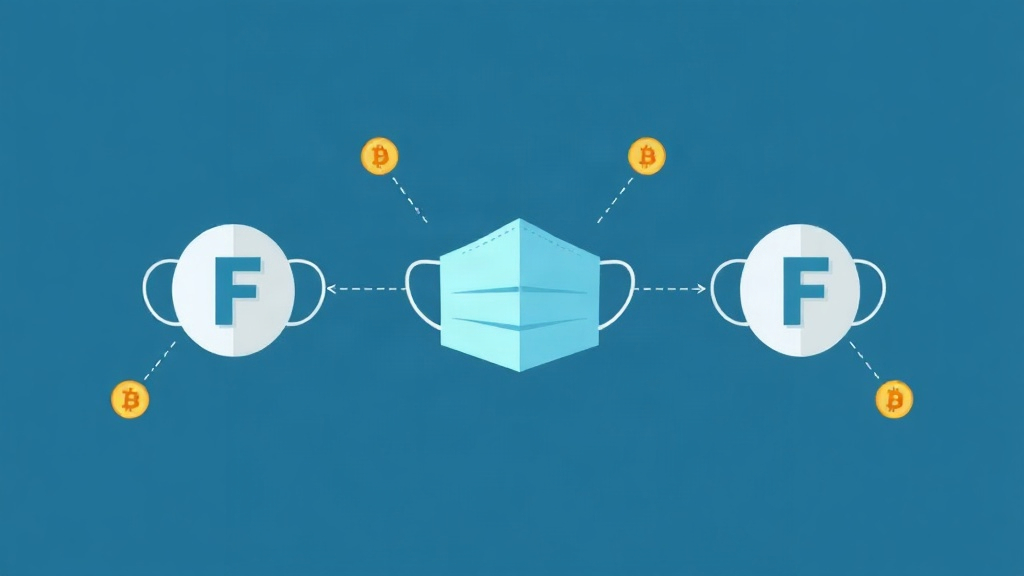
The cryptocurrency landscape was built on the premise of radical transparency, a feature designed to eliminate the need for trusted intermediaries. However, this very transparency has created a paradox: while transactions are publicly verifiable, they are also permanently traceable, leaving users vulnerable to surveillance, data harvesting, and targeted attacks. As the digital economy expands, the demand for financial confidentiality has never been louder. Findora, a revolutionary layer-1 blockchain, addresses this challenge head-on. By integrating advanced cryptographic techniques into its core architecture, Findora aims to deliver a decentralized financial system that does not sacrifice user privacy for the sake of auditability. At the very heart of this mission lies a transformative feature known as Triple Masking, which represents a monumental leap forward in the quest for true digital anonymity.
What is Findora Triple Masking?
In most traditional blockchain networks, privacy is either non-existent or only partially implemented. For example, while Bitcoin obscures the real-world identity behind an address, the transaction amounts and the flow of funds between wallets are entirely visible to the public. Findora’s Triple Masking fundamentally changes this paradigm by concealing three critical components of every transaction simultaneously. These three elements are the sender's identity, the receiver's identity, and the transaction amount. By masking all three pillars at once, Findora ensures that no external observer, blockchain analytics firm, or malicious actor can piece together the flow of funds. This comprehensive approach to obfuscation provides users with an unprecedented level of confidentiality, transforming the blockchain from a public ledger of financial behavior into a secure, private network.
How Does Triple Masking Work?
The technological marvel behind Triple Masking is rooted in zero-knowledge cryptography, specifically a formulation known as zk-SNARKs (zero-knowledge succinct non-interactive arguments of knowledge). When a user initiates a transaction on the Findora network, the system does not broadcast the raw details of the transfer. Instead, it generates a complex cryptographic proof. This proof mathematically verifies that the transaction is legitimate—confirming that the sender possesses the funds they are attempting to transfer and that they are not attempting to double-spend—without revealing any of the underlying data. The network validates the proof, updates the ledger, and records the transaction, all while keeping the sender, receiver, and amount completely hidden. It is a delicate and brilliant balance of trustless verification and absolute privacy, allowing the blockchain to remain secure and functional without compromising user confidentiality.
Why Triple Masking Matters for Crypto Privacy
In an era of increasing digital surveillance and sophisticated blockchain analytics, the ability to transact privately is no longer a niche desire; it is a fundamental necessity. Without robust privacy features, even pseudonymous networks are highly susceptible to deanonymization. Data firms and malicious actors can trace transaction histories, link wallets to real-world identities through IP tracking or exchange KYC data, and analyze financial behaviors on a massive scale. Findora’s Triple Masking disrupts this surveillance economy entirely. It protects users from targeted phishing attacks, prevents competitors from gaining unfair insights into business operations, and safeguards the financial sovereignty of individuals. By ensuring that financial data remains confidential, Findora empowers users to truly own their digital assets and engage in the decentralized economy without the fear of being watched or judged.
Practical Tips for Using Findora's Privacy Features
If you are ready to leverage the power of Findora’s Triple Masking to secure your financial transactions, it is essential to adopt best practices that maximize your privacy and overall security. Here are some actionable steps to guide you:
- Verify the masking status: Always double-check that the transaction interface explicitly confirms that Triple Masking is active before finalizing any transfer. This ensures that all three elements—sender, receiver, and amount—are fully obscured.
- Use dedicated wallets: Rely on official or highly vetted Findora-compatible wallets to guarantee that the cryptographic proofs are generated correctly. Third-party tools might leak metadata that compromises the masking process.
- Avoid address reuse: Even with the robust protection of Triple Masking, generating a new address for each transaction adds an extra layer of security against potential heuristic analysis.
- Stay updated on protocol upgrades: Cryptographic standards evolve rapidly. Keep your software updated to benefit from the latest improvements in zk-SNARK efficiency, security patches, and masking algorithms.
- Understand the fee structure: Privacy transactions require significantly more computational power to generate and verify proofs. Familiarize yourself with the gas fees associated with Triple Masking to avoid unexpected costs and ensure smooth transaction processing.
Conclusion
The future of decentralized finance relies heavily on the ability to transact securely and privately without relying on centralized intermediaries. Findora’s Triple Masking stands at the forefront of this revolution, proving that transparency and privacy are not mutually exclusive but rather complementary forces. By hiding the sender, receiver, and amount, Findora provides a robust, mathematically verifiable solution to the surveillance pitfalls that plague traditional blockchains. As the cryptocurrency landscape continues to mature and regulatory scrutiny increases, privacy-enhancing technologies like Triple Masking will become absolutely indispensable. For anyone serious about financial sovereignty and digital freedom, understanding and utilizing Findora’s privacy features is a crucial step toward securing your digital future.