
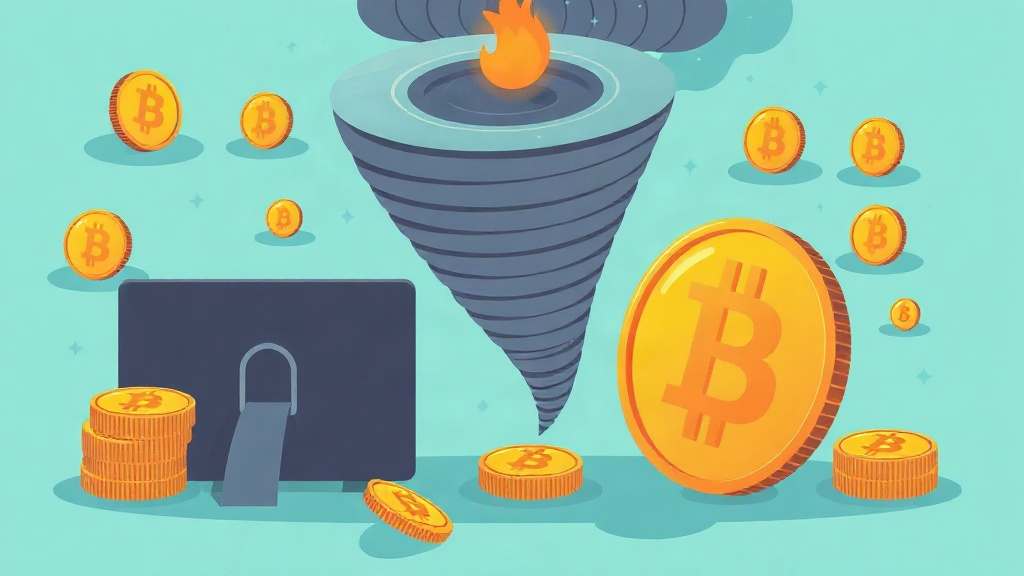
Tornado Cash became a household name in cryptocurrency privacy circles following its launch as a non-custodial mixing protocol on Ethereum. Designed to break on-chain transaction links, it allowed users to deposit funds, wait for them to be pooled with others, and withdraw to a new address without a direct trail. Before the significant regulatory crackdown that followed, many privacy advocates and crypto users explored its deposit mechanics as a practical tool for obfuscating fund flows. Understanding how deposits worked before sanctions intensified is essential for anyone interested in the evolution of on-chain privacy and the risks associated with timing such interactions.
The Evolution of Tornado Cash and Deposit Mechanics
Tornado Cash operated on a simple but effective principle: zk-SNARK proofs allowed a user to prove they were the rightful owner of a withdrawn deposit without revealing the deposit's origin. When a user deposited ETH or ERC-20 tokens into a Tornado Cash pool, the protocol issued a cryptographic note. This note could later be used to withdraw an equivalent amount from the same pool, effectively breaking the on-chain link between the sender and receiver. The deposit process itself was permissionless—anyone with a compatible wallet could send funds to a Tornado Cash router contract and receive a leaf nullifier in return. This mechanism made it particularly attractive for users seeking to enhance financial privacy in a transparent blockchain environment.
However, the ease of use also meant that the protocol attracted various types of users, from legitimate privacy seekers to actors looking to obscure the movement of large sums. The deposit window before sanctions became a period of intense activity as users rushed to either protect their privacy or, in some cases, distance themselves from potentially tainted funds. Understanding the technical flow—deposit, pooling, withdrawal—helps clarify why the protocol's timing became a focal point for both enthusiasts and regulators.
- Deposit thresholds: Minimum amounts required to join a pool, varying by token and pool liquidity.
- Note generation: Cryptographic proofs issued immediately after deposit, stored securely by the user.
- Pool mixing: Deposits from multiple users combined, making individual transaction tracing computationally difficult.
- Withdrawal flexibility: Users could withdraw to any address, not necessarily the one that deposited, further breaking traceability.
- Smart contract risk: Reliance on immutable code meant that once deposited, reversing or retrieving funds depended on pool balances and protocol rules.
The Sanctions Timeline and Market Reaction
In August 2022, the U.S. Treasury Department's Office of Foreign Assets Control (OFAC) added Tornado Cash to its Specially Designated Nationals list. This move effectively froze all protocol assets and prohibited U.S. persons from interacting with the contracts. The sanction announcement sent shockwaves through the crypto community, prompting immediate re-evaluations of privacy tool usage and legal compliance. Prior to this event, deposits into Tornado Cash had been viewed by many as a relatively safe, even encouraged, method for maintaining financial discretion. The post-sanction landscape, however, introduced significant risk factors: wallet blacklisting, exchange delistings, and potential legal scrutiny for anyone associated with the protocol's addresses.
The timing of deposits relative to the sanctions became a critical variable. Users who deposited large sums before the August 2022 deadline often found themselves in a precarious position, holding notes redeemable into pools now under government scrutiny. Conversely, those who delayed deposits faced restricted access as liquidity shifted and alternative privacy solutions emerged. The event also sparked a broader debate about the balance between individual privacy rights and regulatory oversight in decentralized finance, a discussion that continues to shape the development of new mixing and anonymity-preserving technologies.
Practical Privacy Tactics for Crypto Users
For those interested in cryptocurrency privacy, the Tornado Cash episode offers several actionable lessons. While the protocol's future remains uncertain, the core need for transaction obfuscation persists. Below are practical tactics that privacy-conscious users can consider, keeping in mind the evolving regulatory environment:
- Diversify mixing tools: Explore alternative privacy protocols and layer-2 solutions that offer similar obfuscation without the same regulatory exposure.
- Monitor on-chain analytics: Use tools that track fund flows and flag addresses associated with sanctioned entities, helping you avoid inadvertent compliance violations.
- Maintain separate wallets: Keep distinct wallets for transparent and private transactions, reducing the risk of cross-contamination.
- Stay informed on legal updates: Regulatory landscapes shift rapidly; subscribing to reputable crypto law analysis sources can help you anticipate changes affecting privacy tools.
- Prioritize self-custody: Holding private keys and using non-custodial wallets ensures you retain control over your funds, regardless of platform changes.
These strategies emphasize proactive risk management rather than reactive compliance, aligning with the broader goal of maintaining financial freedom in a digital economy increasingly subject to oversight.
Lessons Learned and Future Outlook
The Tornado Cash sanctions marked a pivotal moment for the crypto privacy sector. They demonstrated that even technically decentralized tools can face centralized regulatory pressure, and that timing interactions with such protocols carries inherent risks. For newcomers and veterans alike, the experience underscores the importance of understanding both the technical mechanics and the geopolitical context of the tools they use. As the industry matures, we can expect an increase in privacy-focused projects designed with compliance in mind, potentially offering hybrid solutions that balance user anonymity with regulatory acceptability.
Looking ahead, the development of zero-knowledge proof technologies, privacy-preserving layerchains, and decentralized identity frameworks may provide alternative pathways for those seeking to protect their financial data. Meanwhile, the lessons from Tornado Cash's rise and fall will continue to influence how users approach deposits, withdrawals, and the broader concept of on-chain privacy. By staying educated, diversifying strategies, and prioritizing self-custody, crypto enthusiasts can navigate these challenges while preserving the core values of decentralization and financial sovereignty.
Ultimately, the story of Tornado Cash before and after sanctions serves as a cautionary yet instructive tale for the cryptocurrency community. It reminds us that privacy in crypto is not just a technical feature but a dynamic interplay of technology, law, and user behavior. As new tools emerge and regulations evolve, maintaining a proactive, informed approach will be the best defense for anyone committed to protecting their on-chain privacy.